4/3/2026
As the global electric vehicle (EV) market continues to expand, the demand for high-power DC fast charging is increasing rapidly. This evolution places greater technical and safety requirements on one critical component: the DC charging connector and cable assembly.
For suppliers like NexwayEV, understanding the latest international standards is essential to delivering compliant, reliable, and globally competitive EV charging solutions.
In this article, we analyze the latest IEC 61851-23:2023 standard, focusing on how it reshapes the design, safety, and configuration requirements of DC charging connectors and cables.
With higher charging currents comes increased heat generation. Managing temperature rise in charging connectors and cables has become a key challenge—especially in hot climates or heavy-duty usage scenarios.
The new standard defines:
as graspable components, meaning users may directly touch them during operation.
This removes ambiguity from previous standards and places stricter responsibility on manufacturers to ensure user safety.
Under standard conditions:
However, if safety measures are applied (such as warning labels or additional handles), limits can be extended to:
This provides flexibility in design, but also requires better safety communication and ergonomic considerations.
A common industry issue:
This mismatch may lead to:
Components failing to meet real-world operating conditions
For global suppliers, ensuring aligned certification standards is crucial for project reliability.
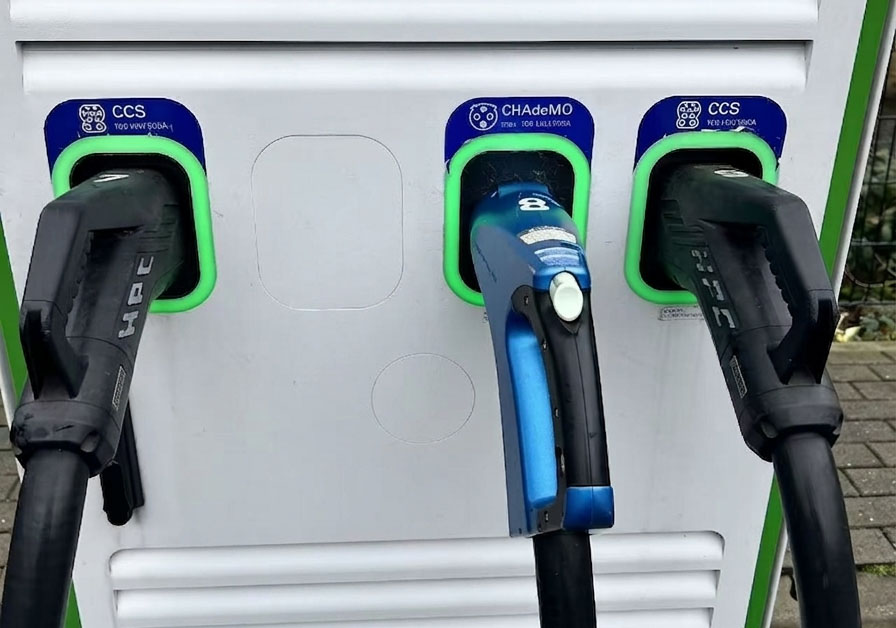
Different regions adopt different DC charging standards, including:
According to IEC 61851-23:2023 (Annex FF), charging systems are categorized by their power electronics configuration (PEC):
However, only five connector combinations are permitted:
Not allowed:
From an industry perspective:
That said, future revisions may evolve as global charging networks become more interconnected.
Beyond electrical performance, IEC standards also emphasize usability and accessibility.
Standard requirement:
In addition, many regions enforce accessibility regulations, such as:
These regulations ensure:
For international projects, local compliance is essential.
Requirement:
Purpose:
Industry practice:
Most manufacturers limit cable length to ≤ 7.5 m to simplify design
The latest standards reflect a broader shift in the EV charging industry:
| Traditional Focus | Emerging Focus |
|---|---|
| Charging speed | User safety |
| Equipment reliability | Ergonomics |
| Technical specs | User experience |
Key priorities:
As a supplier specializing in EV charging connectors and cable assemblies, NexwayEV recognizes that success in global markets depends on:
As EV adoption accelerates worldwide, charging infrastructure is evolving from basic functionality to high-quality user-centric design.
DC charging connectors and cables are no longer just components—they are critical touchpoints between users and energy systems.
Companies that lead in standard compliance, product design, and global adaptability will be best positioned to succeed in the rapidly growing EV charging market.
The following are our popular EV charging products that you may be interested in. If you have any questions, please feel free to contact us, and our specialists will answer within 24 hours.
If you're interested in our products and would like more information, please leave a message here. We will respond to you as soon as possible.