3/13/2026
The era of Megawatt flash charging has arrived. As electric buses and heavy-duty trucks become more prevalent, the industry faces a critical challenge: the power limit of current charging interfaces. Standard DC interfaces (like GB/T 20234.3-2023) are capped at 800A/1500V, reaching a maximum of 800kW. For heavy trucks with 200kWh+ batteries, this is insufficient. Enter the Megawatt Charging System (MCS), formalized under the new IEC TS 63379:2026 technical specification.
MCS is designed specifically for heavy-duty transport, including trucks, ships, and aviation.
Origin: Initiated by CharIN in 2018 to meet high-power demands.
Evolution: Originally defined as 3.75MW (1250V/3000A) in 2022, the parameters were upgraded in 2025 to 1500V/3000A, pushing theoretical power to 4.5MW.
Standardization: The release of IEC TS 63379:2026 in January 2026 marks the transition from a technical proposal to a globally unified standard.
The IEC TS 63379:2026 specification defines several system architectures to ensure safety at extreme power levels:
Standard Systems: Basic frameworks without active thermal management.
Liquid-Cooled Systems: Systems featuring thermal management for the charging connector and cable (essential for high-current operation).
Dual-End Cooling: Advanced setups where both the charging station and the vehicle feature integrated thermal management.
The standard introduces two primary configurations for different market and technical needs:
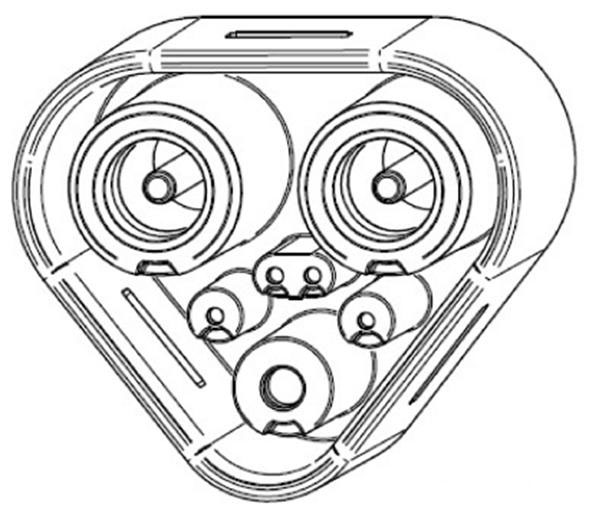
The most iconic MCS design, featuring a triangular connector.
Requires liquid cooling for peak performance.
Key Pins: Includes DC+/DC- for power, PE for protection, and unique ID (Insertion Detection) and CE (Charge Enable) contacts. Unlike CCS2, MCS uses dedicated signaling interfaces instead of coupling communication on the CP signal.
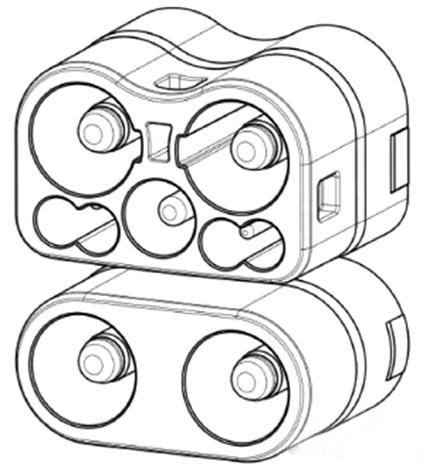
Evolved from the national standard (GB) high-power DC interface.
Features dual-channel parallel charging (DC1+/DC1- and DC2+/DC2-), increasing capacity from 800A to 2x800A at 1500V.
Liquid cooling is optional for this configuration.
The release of the MCS technical specification is a milestone in the charging market. As the demand for economic efficiency in heavy-duty electric transport grows, MCS will drive the next generation of high-power interfaces and charging piles. For manufacturers and operators, staying ahead of this standard is the key to mastering the future of heavy-duty mobility.
The following are our popular EV charging products that you may be interested in. If you have any questions, please feel free to contact us, and our specialists will answer within 24 hours.