1/23/2026
With the growing popularity of electric vehicles (EVs), the selection of charging infrastructure and accessories has become increasingly important. Many EV owners ask the same question when charging at home or at public locations: How long should an EV charging cable be?
This seemingly simple question actually involves multiple considerations, including safety, charging efficiency, ease of use, and regulatory requirements.
Currently, most EV charging cables available on the market range from 4 to 10 meters. This length is sufficient for the majority of home garages, driveways, and typical parking spaces, while also remaining convenient for daily use and storage.
If the cable is too short, it may not reach the charging point properly; if it is too long, it can easily become tangled, be more difficult to manage, and may even pose a tripping hazard.
Cable length has a direct impact on electrical resistance and voltage drop. As cable length increases, resistance also increases, which can result in voltage loss and reduced energy efficiency. This effect is more noticeable during high-power charging. Therefore, selecting a cable length that matches the actual distance can help minimize charging time and energy loss.
In addition, excessively long cables may increase the risk of overheating, especially under high-current charging conditions. This places higher demands on the cable's insulation materials and overall safety performance. For this reason, manufacturers generally advise against using cables that are longer than necessary.
At public charging stations—particularly AC and DC fast charging stations—charging cables are usually designed with standardized lengths to accommodate most parking layouts. For example, some urban public AC charging stations use cables measuring 5–7 meters, while DC fast charging stations often use shorter cables to reduce resistance and simplify handling.
Even so, cable reach and station layout can still influence overall charging convenience.
Some EV owners may consider using extension cables to increase charging distance. However, professional guidance strongly recommends avoiding ordinary extension cables whenever possible. Standard household extension cords are typically not designed to carry the high current required for EV charging, which can lead to overheating, insulation damage, or even fire hazards.
If a longer reach is truly necessary, a dedicated EV charging extension cable or a longer charging cable that meets applicable standards should be used, and it must comply with local electrical safety regulations.
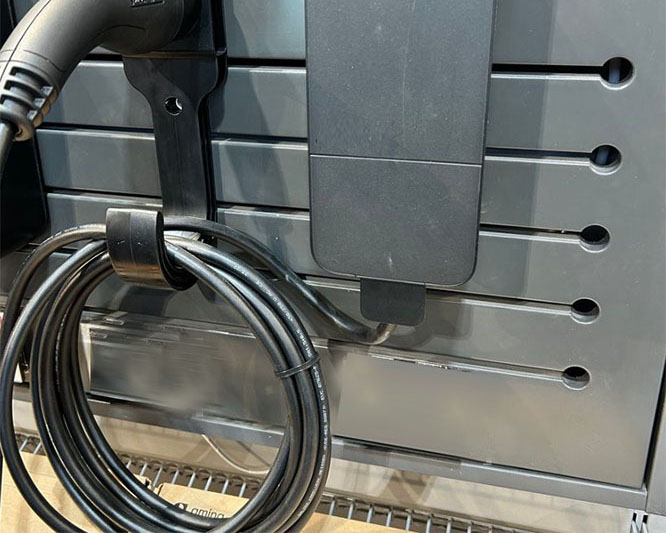
When selecting an EV charging cable, consider the following factors:
In conclusion, there is no strict maximum limit for EV charging cable length, but in practical applications, 4–10 meters remains the most common range. When a longer cable is required, it is important to carefully balance safety, charging efficiency, ease of use, and regulatory compliance. Selecting the appropriate cable length not only improves the charging experience but also helps reduce energy loss and potential safety risks—an important detail every EV owner should consider.
The following are our popular EV charging products that you may be interested in. If you have any questions, please feel free to contact us, and our specialists will answer within 24 hours.