What Is a Type 2 Outlet?
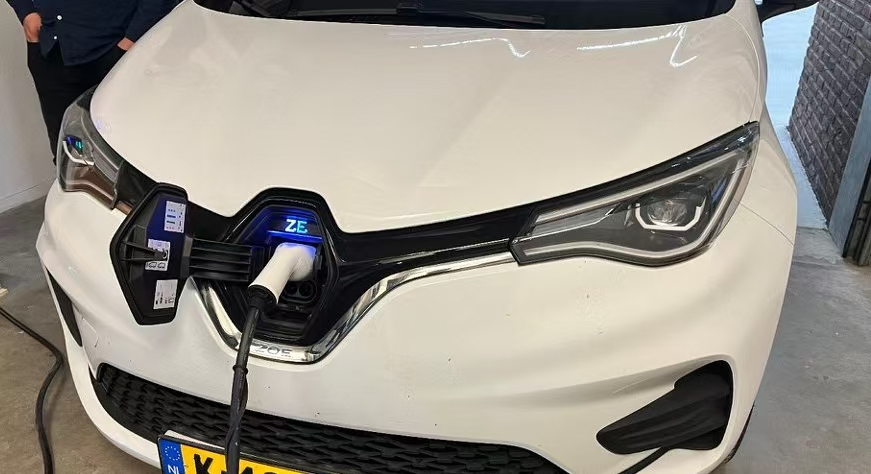
A Type 2 outlet is a European-standard AC electric vehicle charging interface, typically featuring a round design with seven pins. It is widely used at public charging stations and home wallboxes across Europe, allowing users to conveniently connect their vehicles to a power source for charging.
The Type 2 interface supports both single-phase and three-phase power supplies, meaning charging speeds can vary depending on the available power source and the vehicle's charging capability.
In addition to its flexibility, the Type 2 design emphasizes safety. Communication pins allow the vehicle and the charging equipment to exchange information, enabling current regulation as well as controlled start and stop of the charging process. This helps ensure safe charging even in cases of power fluctuations or improper connections.
Can a Standard Household Outlet Be Used for EV Charging?
Many vehicle owners wonder whether an electric vehicle can be charged directly from a standard household outlet. In theory, this is possible, but the practical effectiveness is quite limited.
For example, a standard 230 V household outlet (common in most European homes) typically delivers a maximum output of around 2.3 kW. At this power level, charging is very slow and may take a full day or longer to fully recharge an EV battery. As a result, this method is generally suitable only for short-term or emergency use, rather than as a primary daily charging solution.
By contrast, installing a dedicated home wallbox provides faster charging and improved safety, significantly enhancing both efficiency and user experience.
Type 2 Charging: AC or DC?
Understanding the difference between AC (alternating current) and DC (direct current) is essential when evaluating charging speed and efficiency.
Type 2 interfaces are designed exclusively for AC charging. In this process, AC power is supplied to the vehicle and then converted into DC power by the vehicle's onboard charger before being stored in the battery. Because onboard chargers have a maximum power rating, a vehicle may not be able to utilize the full output of a higher-power external charger.
In comparison, DC fast charging systems, such as CCS (Combined Charging System), deliver DC power directly to the battery. This enables much faster charging but requires more advanced and complex charging infrastructure.
Is Three-Phase Power Really Faster?
Yes. Three-phase power systems allow higher power transfer, resulting in faster charging. Under typical conditions, a Type 2 charger operating on three-phase power can deliver up to 22 kW, which is several times higher than single-phase charging (commonly 3.7 kW or 7.4 kW).
However, to fully benefit from three-phase charging, the vehicle itself must support three-phase AC input. If a vehicle is limited to single-phase charging, it will draw power accordingly, while the charger automatically adjusts without causing any damage to the vehicle.
Why Has Type 2 Become the European Standard?
Although multiple charging standards exist worldwide, Type 2 has become the dominant AC charging standard throughout continental Europe. This is mainly due to the following reasons:
1. Support for three-phase power, accommodating different charging power requirements;
2. Compliance with safety standards and the inclusion of a locking mechanism to prevent accidental disconnection during charging;
3. A standardized communication interface that enables intelligent charging control;
4. Since 2014, European Union regulations have required public AC charging stations to be equipped with Type 2 interfaces, accelerating widespread standardization.
These advantages ensure reliable and efficient AC charging in both residential and public charging environments.
What Is the Charging Power Range of a Type 2 Outlet?
Type 2 charging interfaces support a wide range of power levels, depending on the electrical supply and the vehicle's onboard charging capability. In general, residential installations typically provide 3.7–11 kW, while public charging stations may deliver 22 kW or more under suitable conditions.
In practice, charging speed is determined by the lowest limit among the following three factors:
1. Grid power supply capacity;
2. Maximum output capability of the charging equipment;
3. Power acceptance capability of the vehicle's onboard charger.
Can a CCS Plug Be Directly Inserted into a Type 2 Socket?
CCS (Combined Charging System) and Type 2 connectors appear similar, particularly in the upper section of the connector. However, a CCS plug cannot be directly inserted into a standard Type 2 socket.
That said, vehicles equipped with CCS ports can still use Type 2 charging. The upper portion of a CCS inlet is typically compatible with
Type 2 AC charging, allowing the use of a Type 2 cable for AC charging. DC fast charging, however, requires additional DC pins and can only be performed at charging stations that support CCS DC charging.
Is Type 2 Compatible with All Electric Vehicles?
Most electric vehicles sold in the European market support Type 2 charging. Whether a vehicle is equipped with a Type 2 inlet or an older Type 1 inlet, charging is possible as long as the correct cable is used (such as a Type 2-to-Type 1 cable).
For vehicles using other standards, such as CHAdeMO, an additional adapter may be required, or charging may be limited to compatible stations. Nevertheless, for mainstream electric vehicles, Type 2 has become the preferred solution for everyday AC charging.
Summary
Charging an electric vehicle via a Type 2 outlet is entirely feasible and has become the standard approach for most AC charging scenarios in Europe. Whether using a home wallbox or a public charging station, safe and efficient charging is easily achieved with the correct plug and cable. As the electric vehicle industry continues to evolve, understanding these fundamental charging concepts is increasingly important for both EV owners and charging infrastructure operators.