1/8/2026
As electric vehicles (EVs) continue to gain mainstream adoption, driving range has become a growing concern for many consumers. For many people, the first question is no longer “How much does it cost?” but rather, “How far can it go on a single charge?”
This question not only affects the overall driving experience, but also plays a key role in charging planning and daily commuting decisions.
This article provides a comprehensive overview of EV range from four perspectives: basic concepts, influencing factors, real-world performance, and optimization tips.
In simple terms, driving range refers to the maximum distance an electric vehicle can travel on a single full charge. It is one of the key indicators used to evaluate EV performance, similar to "miles per gallon” for traditional gasoline vehicles.
However, unlike fuel efficiency ratings, EV range is influenced by multiple variables—including battery capacity, driving habits, and environmental conditions—so there is no single, fixed value that applies in all situations.
1. Battery Capacity and Energy Density
Battery capacity, typically measured in kilowatt-hours (kWh), is the primary factor determining an EV’s driving range. In general, a larger battery can store more energy and therefore support longer driving distances.
That said, battery capacity alone does not tell the whole story. Energy density and real-world utilization efficiency also play important roles. For example, two EVs with the same battery capacity may deliver different ranges if one is equipped with a more advanced Battery Management System (BMS) that optimizes energy usage more effectively.
2. Driving Speed and Driving Habits
Vehicle speed is a major contributor to energy consumption. At higher speeds, air resistance increases significantly, causing the battery to drain more quickly. As a result, EVs often achieve shorter ranges on highways than in urban driving conditions.
Smooth acceleration, maintaining a consistent speed, and minimizing hard braking can all help improve real-world driving range.
3. Climate Conditions
Weather conditions have a noticeable impact on EV range. Extremely cold or hot temperatures can reduce battery efficiency, limiting the distance an EV can travel on a single charge. In colder climates, the use of cabin heating and other auxiliary systems further increases energy consumption.
This is why many EV owners experience reduced range during winter months.
Actual driving range varies depending on the vehicle model, battery configuration, and driving conditions. For most mainstream battery electric vehicles, official range ratings—such as those published by the EPA or other regulatory agencies—typically fall between 250 and 500 kilometers (approximately 155 to 310 miles).
Some premium or long-range EV models equipped with large-capacity batteries can achieve official range figures exceeding 600 kilometers (around 373 miles).
It is important to note that these figures are obtained under standardized testing conditions. Real-world driving range often differs due to factors such as road conditions, ambient temperature, vehicle load, and individual driving behavior.
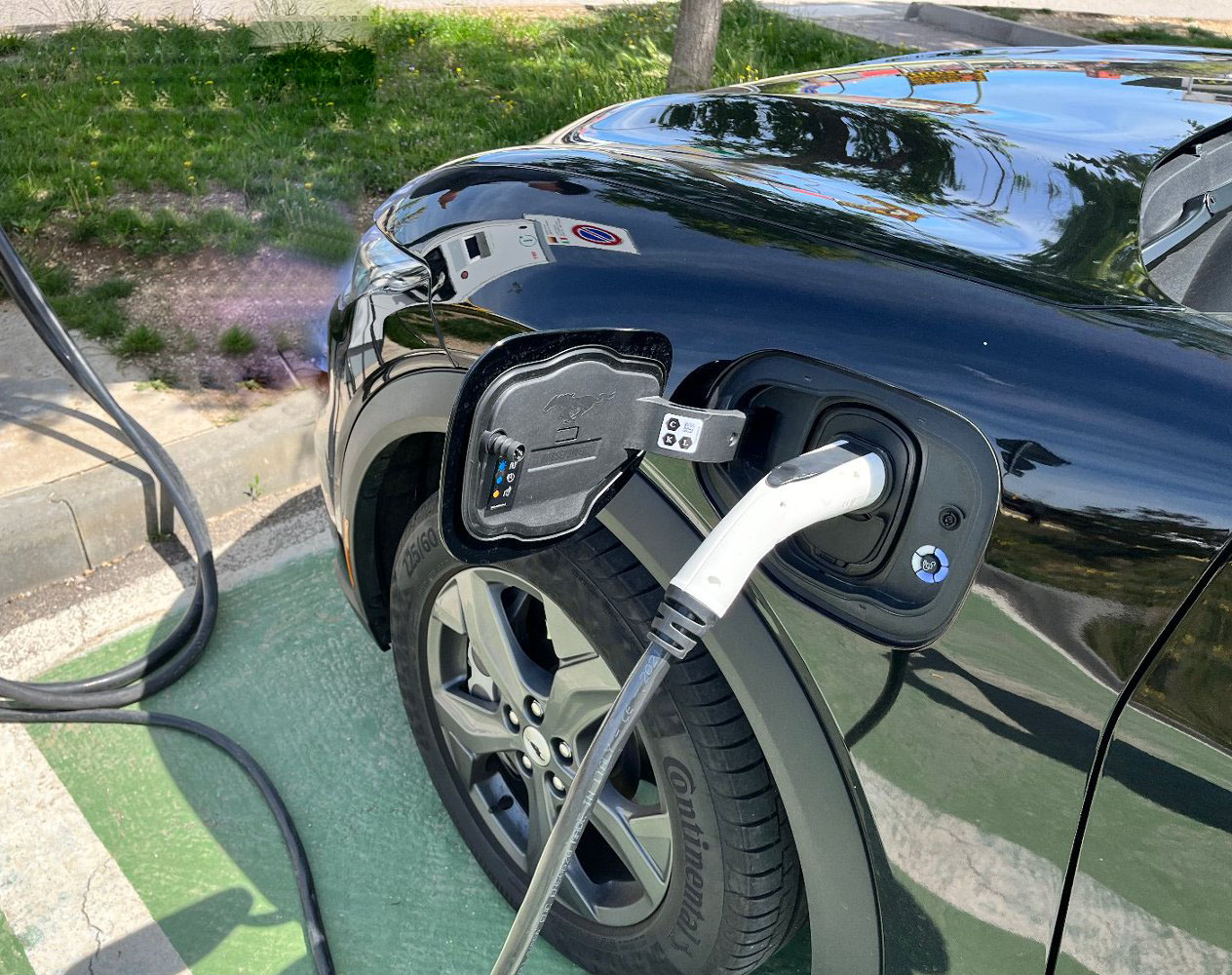
Here are several practical tips to help maximize driving range in everyday use:
1. Optimize driving speed: Maintain a steady cruising speed and avoid frequent acceleration and deceleration, especially on highways.
2. Use climate control efficiently: Apply heating and air conditioning wisely. Pre-heating or pre-cooling the vehicle while it is still plugged in can help reduce energy consumption while driving.
3. Reduce unnecessary load: Avoid carrying excess weight and minimize aerodynamic drag caused by roof racks or external cargo.
4. Plan charging strategically: Avoid letting the battery drop to extremely low levels before charging. This supports more stable range performance and helps extend battery lifespan.
5. Take advantage of regenerative braking: Use regenerative braking whenever possible to recover energy, particularly in stop-and-go city traffic.
Understanding charging methods is also essential for EV owners:
1. AC Charging (Slow Charging)
Ideal for long parking periods at home or the workplace. Although charging power is lower, it is generally gentler on the battery.
2. DC Fast Charging
Suitable for long-distance travel, allowing drivers to quickly replenish a significant portion of the battery in a short time.
3. Three-Phase Charging
In locations with three-phase power supply, higher charging power can be achieved, significantly reducing charging time.
Using these charging options appropriately can make EV ownership more efficient and convenient.
How far an electric vehicle can travel on a single charge is an important consideration for every EV owner. However, understanding the factors behind driving range is just as important as the number itself.
EV range is not a fixed value—it is a dynamic outcome shaped by real-world conditions. By understanding the key factors that affect range and adopting smart driving and charging strategies, drivers can significantly enhance their overall EV experience.
To learn more about EV charging solutions, charging standards, or to find the right home charging equipment, visit the nexwayEv website. We offer a full range of EV chargers and EV charging connectors, along with professional product selection guidance and reliable after-sales support.
The following are our popular EV charging products that you may be interested in. If you have any questions, please feel free to contact us, and our specialists will answer within 24 hours.
If you're interested in our products and would like more information, please leave a message here. We will respond to you as soon as possible.